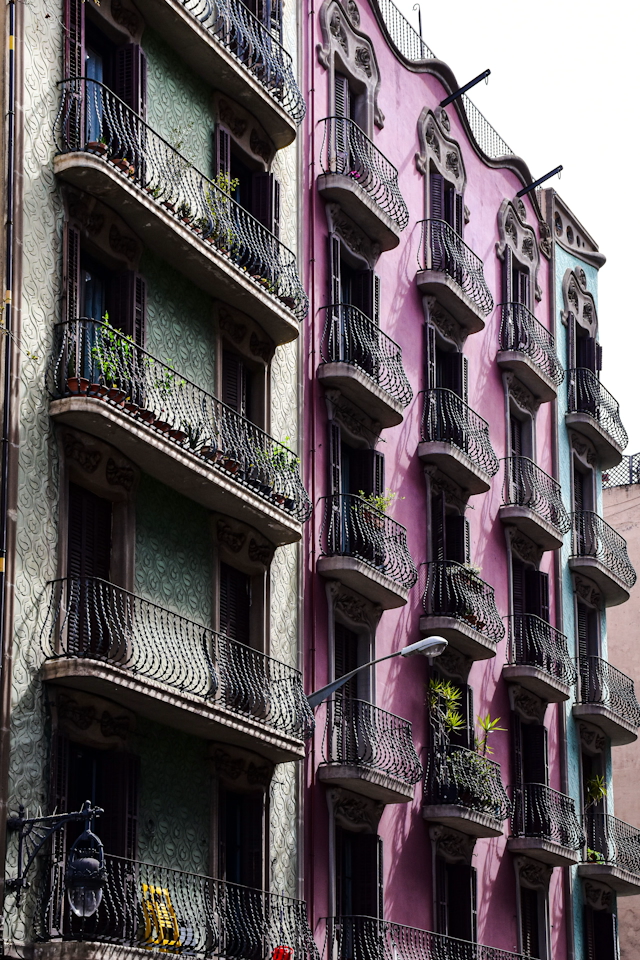
Barrio Chino / El Raval
The term El Barrio Chino (The Chinese Quarter) is one of the most fascinating, misunderstood, and atmospheric labels in Barcelona’s history. For decades, it was a legendary enclave of vice, cabaret, crime, and creative rebellion. Today, the area is officially known as El Raval, but the ghost of the Barrio Chino still lingers in its narrow streets, architecture, and local lore. Here is the real history and the most interesting facts about Barcelona's old "Chinatown":
1. The Big Irony: There Were Almost No Chinese People The most surprising fact about the Barrio Chino is that it was never an actual Chinatown. Unlike the Chinese neighborhoods in San Francisco, New York, or London, which were formed by large immigrant communities, Barcelona’s Barrio Chino had virtually no Chinese residents or businesses when it got its name. The name was actually coined in 1925 by a journalist named Francisco Madrid. He wrote a series of sensationalist articles about the neighborhood's gritty, chaotic underworld and compared it to the dangerous, opium-scented "Chinatowns" depicted in Hollywood movies. The catchy name stuck, and the city embraced the myth.
2. A Magnet for the Global Avant-Garde Despite its dangerous reputation (or perhaps because of it), the Barrio Chino became an absolute playground for the world’s most famous writers, artists, and intellectuals during the 1920s and 30s. They were drawn to its raw, unpolished energy.
· Jean Genet: The famous French writer lived here as a destitute thief and beggar, later immortalizing the neighborhood's transvestites, criminals, and lower-class alleys in his masterpiece The Thief's Journal.
· Ernest Hemingway & George Orwell: Both spent significant time in the neighborhood's taverns, soaking in the gritty atmosphere and the radical political undercurrents of the working class.
· Pablo Picasso: Before the neighborhood even had its name, a young Picasso frequented the brothels of these very streets. His groundbreaking masterpiece, Les Demoiselles d'Avignon, was directly inspired by the sex workers on Carrer d'Avinyó (which borders the edge of this district).
3. The Capital of "Canalla" (The Underworld) The heart of the Barrio Chino was centered around Carrer de Nou de la Rambla and Carrer de Sant Ramon. By night, it transformed into a neon-lit maze of cabarets, jazz clubs, illegal gambling dens, and brothels. The most legendary venue was El Paral·lel (the massive avenue bordering the neighborhood), which became the "Broadway of Barcelona." It was famous for El Molino, a cabaret heavily inspired by the Moulin Rouge in Paris, where flamenco, political satire, and sensory indulgence pushed the boundaries of what was legally allowed.
4. A Hotbed of Anarchism and Rebellion The Barrio Chino wasn't just a place for partying; it was a deeply political, working-class stronghold. Because it was incredibly dense and cut off from the wealthy parts of the city, it became the perfect breeding ground for anarchism and radical labor unions like the CNT. During the Spanish Civil War (1936–1939), the neighborhood was a fierce center of anti-fascist resistance. Its labyrinthine alleys made it impossible for traditional police forces to control, and the residents fought block-by-block using homemade barricades.
5. The Francoist Attempt to Erase It When General Francisco Franco won the civil war and established his dictatorship, he viewed the Barrio Chino as a den of sin, communism, and moral decay. The regime tried desperately to clean up the area’s image. They banned the name "Barrio Chino" from official maps and newspapers, replacing it with "Distrito V" (Fifth District). They shut down the edgier cabarets, persecuted the LGBTQ+ community that had found a safe haven there, and attempted to police the streets—but the neighborhood's rebellious spirit simply went further underground.
6. The 1990s Rebirth: From Chino to Raval By the 1980s, the neighborhood had fallen into a severe heroin epidemic and high crime rates. In preparation for the 1992 Olympic Games, the city government launched a radical urban renewal plan. They demolished entire blocks of decaying medieval tenements to punch a massive, sunlit boulevard right through the dark heart of the neighborhood: La Rambla del Raval. They rebranded the entire district as El Raval, built the world-class MACBA (Contemporary Art Museum), and invited trendy cafes and student housing to move in.
📍 Where to find the ghost of the Barrio Chino today: The Marsella Bar (Carrer de Sant Pau, 65): Operating since 1820, this is Barcelona’s oldest tavern. Hemingway, Picasso, and Dalí drank absinthe under these exact same dusty chandeliers. It still looks exactly as it did a century ago. The Raval Cat: A massive, whimsical bronze cat sculpture by Fernando Botero now sits proudly on the Rambla del Raval—a playful symbol of the neighborhood’s street-smart, independent, and resilient identity.
Antoni Gaudí’s masterwork was built between 1886 and 1890 for his wealthy patron, Eusebi Güell. By the early 20th century, this opulent palace sat directly on the border of what was quickly becoming the seediest, most dangerous neighborhood in Europe.
· The Legend & The Paradox: Tourists find it shocking that an elite industrialist built a hyper-luxurious mansion here rather than the wealthy Passeig de Gràcia. Rumor has it that Güell refused to move because he proudly wanted to stay close to his family's roots and businesses near the port. Gaudí designed the palace like a medieval fortress to shield the family from the surrounding neighborhood.
· The Secret Detail: Look at the two massive, arched iron front doors. They were designed specifically so that horse-drawn carriages could enter at high speed from the narrow street, immediately sealing the family inside a private, secure sanctuary away from the chaotic street crime of the early Barrio Chino.
This bustling junction forms the historic heart of the upper Raval. In the center stands a fountain topped by a statue of Saint Eulalia, the co-patron saint of the city.
· The Brutal Myth: According to 4th-century Roman records and local Catholic lore, this square is the exact location where the young, 13-year-old Christian girl Eulalia was subjected to the last of her 13 horrific tortures by the Roman governor Dacian.
· The Legend: Tradition says she was stripped naked and nailed to an X-shaped cross right in this square. Local myth claims that a miraculous, sudden winter snowfall fell from the sky out of nowhere to cover her naked body from the mocking crowd. When she finally died, onlookers claimed to see a white dove fly directly out of her mouth toward the heavens. The fountain monument stands on the exact spot where this execution supposedly occurred.
· Santa Eulàlia en Plaça del Pedró (leyenda fundacional cristiana):
Según la tradición, Santa Eulàlia, niña de 13 años y patrona de Barcelona, fue martirizada en este lugar (o cerca, en el llano de la Boqueria) durante las persecuciones romanas (principios del s. IV). “La leyenda”: Se negó a renunciar a su fe ante el gobernador romano. Sufrió 13 tormentos (uno por cada año de vida): azotes, fuego, crucifixión en aspa, ser lanzada rodando en un barril con clavos y cristales por la Baixada de Santa Eulàlia, etc. Para proteger su desnudez, cayó una nevada milagrosa o le creció el cabello.
Cómo contarla: En la fuente-monumento de la plaza, ideal para hablar de los orígenes medievales del Raval como zona de huertos y santos.
Serving as the city's main hospital from 1401 to 1926, this grand Gothic courtyard holds centuries of dark medical history.
· The Tragic Story: On June 7, 1926, a frail, elderly man was struck by a tram on Gran Via. Because he carried no ID, wore ragged clothes, and had his pockets stuffed with nothing but nuts and a small gospel book, everyone assumed he was just another destitute beggar from the Barrio Chino. He was brought to this exact hospital—which was then the charity hospital for the poor. By the time a local priest recognized him as the legendary architect Antoni Gaudí, it was too late. He died here three days later among the city's poorest outcasts.
· The Ghostly Myth: For generations, superstitious locals claimed that the old hospital gardens were haunted by the souls of unidentified souls and criminals whose bodies went unclaimed from the hospital morgue and were used for anatomy lessons by local medical students.
· Fantasmas y espíritus del Hospital de la Santa Creu
El antiguo hospital gótico (donde murió Gaudí) tiene sus propias historias fantasmales. “Leyenda”: Se dice que aún se oyen lamentos, pasos y voces de enfermos y monjas en los patios y naves. Durante siglos fue lugar de muerte y peste; hay relatos de apariciones y una fosa común (Pozo de las Ánimas) donde supuestamente resuenan almas.
“Contexto”: Combina bien con la historia real del edificio y la atmósfera medieval del Raval.
¡La leyenda de Enriqueta Martí, la “Vampira del Raval”!
Una de las historias más oscuras y controvertidas del Barrio Chino (El Raval). Es perfecta para contarla durante un tour nocturno o al pasar por las calles estrechas del barrio, ya que mezcla realidad, sensacionalismo periodístico y mitos urbanos.
¿Quién fue Enriqueta Martí?
Nacimiento y vida: Nacida el 2 de febrero de 1868 en Sant Feliu de Llobregat. Llegó joven a Barcelona y vivió en los bajos fondos del Raval. Trabajó como prostituta, regentó burdeles, ejerció como curandera (bruja o “sanadora”) y se dedicó a la mendicidad y proxenetismo.
Detención (1912): El 27 de febrero de 1912, una vecina vio a una niña con la cabeza rapada asomada a una ventana del entresuelo del número 29 de la Calle de Poniente (hoy Carrer de Joaquim Costa). Llamaron a la policía. En el piso encontraron a Teresita Guitart (niña desaparecida) y a otra niña, Angelita. Enriqueta fue detenida.
La leyenda negra (la versión más contada a turistas)
La prensa de la época la convirtió en un monstruo:
· Se la acusó de secuestrar decenas de niños pobres del Raval.
· Supuestamente los prostituía a las clases altas de Barcelona.
· Los mataba, extraía su sangre, grasa y huesos para fabricar ungüentos y pociones mágicas que vendía como remedios contra la tuberculosis y otras enfermedades.
· En sus diferentes viviendas (Carrer Ponent, Tallers, Picalqués y una casa en Sants) se encontraron restos óseos de niños, frascos con sangre, ropa infantil y un cuchillo ensangrentado.
· Apodos: Vampira del Raval, Vampira de la calle Poniente o Vampira de Barcelona. Se decía que bebía sangre y practicaba rituales macabros.
Esta historia alimentó el miedo en una Barcelona de principios del siglo XX llena de pobreza, prostitución infantil y desapariciones reales.
La versión más realista (investigaciones modernas)
Estudios recientes (como el libro Barcelona 1912 de Jordi Corominas, 2014) matizan mucho la leyenda:
· Solo se probó fehacientemente el secuestro de Teresita Guitart. Muchos restos óseos podrían provenir de cementerios (usados como amuletos) o ser de animales.
· La sangre encontrada probablemente era suya (sufría un cáncer de útero que le provocaba hemorragias).
· La prensa sensacionalista exageró los detalles escabrosos para vender periódicos y posiblemente para distraer de escándalos de pedofilia en clases altas y fallos policiales.
Murió el 12 de mayo de 1913 en la cárcel de Reina Amàlia (posiblemente asesinada por otras internas o por su enfermedad). Nunca fue juzgada por los supuestos asesinatos en serie.
This wide, palm-tree-lined boulevard was created in 1995 by bulldozing blocks of decaying medieval tenements to intentionally break up the dark, tightly packed crime alleys of the old Distrito V.
· The Myth of the Wandering Cat: The massive bronze cat sculpture by Fernando Botero is the undisputed mascot of the modern Raval, but it has a comical history of "homelessness." Bought by the city in 1987, the government didn't know where to put it. For 15 years, it was moved from the Ciutadella Park, to the Olympic Stadium, to a tiny square near Drassanes. It was passed around like a hot potato until it finally found its permanent home here in 2003.
· The Street Legend: Locals say the cat perfectly mirrors the resilient, street-smart identity of the Barrio Chino itself—always moving, slightly beaten up, but ultimately ruling the neighborhood. Touching the cat's nose (or other parts) is locally rumored to ensure you will return to Barcelona safely.
· Location: Carrer de Sant Pau, 65
· The Vibe: Step through the doors and you step directly into 1820. This is Barcelona’s oldest continuously running tavern, and it serves as the ultimate anchor for the old Barrio Chino identity. The ceilings are peeling, the mirrors are stained with a century of tobacco smoke, and the dusty bottles behind the counter haven't moved in decades.
· The Guide Detail: This is where Hemingway, Picasso, and Salvador Dalí would sit under the low lights, dissolving sugar cubes over forks into glasses of high-proof absinthe. It looks and feels exactly like the bohemian, chaotic haven it was a hundred years ago.
· The Story to Tell: Back in the 1920s and 30s, Marsella wasn’t just an artist's hangout; it was a sanctuary for local thieves, anarchists, and smugglers. The local police knew this, but the narrow layout of the Barrio Chino made surprise raids impossible. Instead, undercover cops would sit at the front tables.
· The Secret Detail: Regulars developed a code based on how they held their absinthe glasses. If a known police informant walked in, patrons would subtly clink their heavy glasses against the marble tables twice. The vibration traveled through the floorboards, alerting the criminals and drug dealers in the dim, windowless back room to slip out through the hidden kitchen exit before a hand could be laid on them. To this day, the back exit exists, leading into a residential stairwell.
· Location: Carrer de la Cera (Walking junction from Carrer de Sant Pau) The Vibe: As you leave Marsella, cut deeper into the neighborhood toward Carrer de la Cera. By night, these tightly packed apartments echo with the neighborhood’s real musical heartbeat.
· The Guide Detail: In the 1940s and 50s, the local Romani community in these exact streets fused traditional flamenco with Afro-Cuban rhythms brought in by sailors at the nearby port, inventing Rumba Catalana. Look out for the vibrant street murals and public art installations honoring musical legends like Peret, who grew up playing guitar on these street corners.
· The Story to Tell: The absolute king of this sound was a man named Peret (Pedro Pubill Calaf), who grew up right here. In the 1950s, he revolutionized guitar playing with a technique called el ventilador (the fan). He would aggressively strum the strings while simultaneously striking the wooden body of the guitar with his palm and knuckles to create a percussion beat. He was essentially a one-man drum kit and guitarist.
· The Legend: The neighborhood was so fiercely proud of Peret that when he practiced on his balcony on Carrer de la Cera, traffic would completely grind to a halt. Delivery carts, neighbors, and local characters would crowd the narrow street below, turning the alley into an impromptu street party. When the Francoist police would arrive to break up the "illegal gathering," the crowd would simply absorb the officers, hand them a glass of wine, and get them dancing along to the rhythm.
This is the oldest church in Barcelona, a Romanesque monastery dating back to the 9th century. In the medieval era, it stood entirely alone outside the city walls (Sant Pau del Camp literally translates to "Saint Paul of the Fields").
· The Legend of Almanzor's Raid: In 985 AD, the legendary Muslim general Almanzor launched a terrifying, brutal raid on Barcelona. Because this monastery sat completely unprotected in the open fields, it was the very first target. The monastery was thoroughly sacked, burned, and the monks were either killed or taken to Córdoba as slaves.
· The Miracle: Despite being burned and abandoned for nearly a century, the core stone structure miraculously survived the fires. When you stand in its quiet, ancient cloister today, you are standing in a space that survived the literal destruction of early medieval Barcelona.
· Location: Carrer de Vila i Vilà, 99 (Just off Av. del Paral·lel) The Vibe: Conclude the route where the dense alleys of the Barrio Chino spill out onto the wide avenue of El Paral·lel—the historic theater district.
· The Guide Detail: Crowned by its iconic, spinning red neon windmill blades, El Molino was the undisputed capital of European avant-garde cabaret and transgressive theater. During the strict censorship of the Franco dictatorship, this venue was a masterclass in double entendres, underground expression, and raw, working-class comedy. It stands today as a beautifully restored monument to the city's rebellious nighttime history.
· The Story to Tell: The neighborhood originally named the venue El Molino Rojo (The Red Windmill), copying Paris. But Franco's regime forced them to drop the word "Rojo" because red was the color of the left-wing Republicans who lost the war.
· The Brilliant Trick: The performers at El Molino became masters of malicious compliance. The censors would sit in the front row on opening nights with notebooks, checking outfits and lyric sheets. The showgirls would wear long, modest capes that completely satisfied the dress code. However, the moment the censors looked down to write a note, the dancers would quickly flash the audience with hidden, revealing outfits beneath the capes, causing the working-class crowd to erupt in cheers. By the time the confused censor looked back up, the capes were closed, the dancers looked perfectly conservative, and the show went on. It was a nightly game of cat-and-mouse that made El Molino a symbol of freedom.
We'll build a timed route starting from your hotel, with restaurant recommendations and opening hours checked for your exact dates.
Build my itinerary →