La Rambla Barcelona: History of the City’s Most Famous Street
Discover the history of La Rambla in Barcelona, from its medieval origins to the lively boulevard of today. Learn about La Boqueria, the Liceu, Canaletes, Joan Miró and the historic events that shaped Barcelona’s most famous street.
La Rambla: The Street That Tells the Story of Barcelona
If there is one street that almost every visitor to Barcelona knows, it is La Rambla. Stretching for approximately 1.2 kilometres from Plaça de Catalunya towards the sea, La Rambla is more than a busy tourist boulevard. For centuries, it has been a place where Barcelona comes together: residents, merchants, artists, politicians, performers and visitors all sharing the same public space.
The history of La Rambla goes back much further than its modern appearance suggests. The area followed the line of Barcelona's medieval city walls, which existed here from the 13th century. Before becoming a famous promenade, the area was associated with a watercourse and drainage channel. The word rambla itself comes from the Arabic ramla, referring to sandy ground or a watercourse.
From Medieval Boundary to City Promenade
The modern La Rambla began to take shape in 1766, when a promenade was created along the former medieval wall. Barcelona was still a relatively compact city, dominated by narrow and winding streets, so this new open space quickly became somewhere people could walk, meet and socialise.
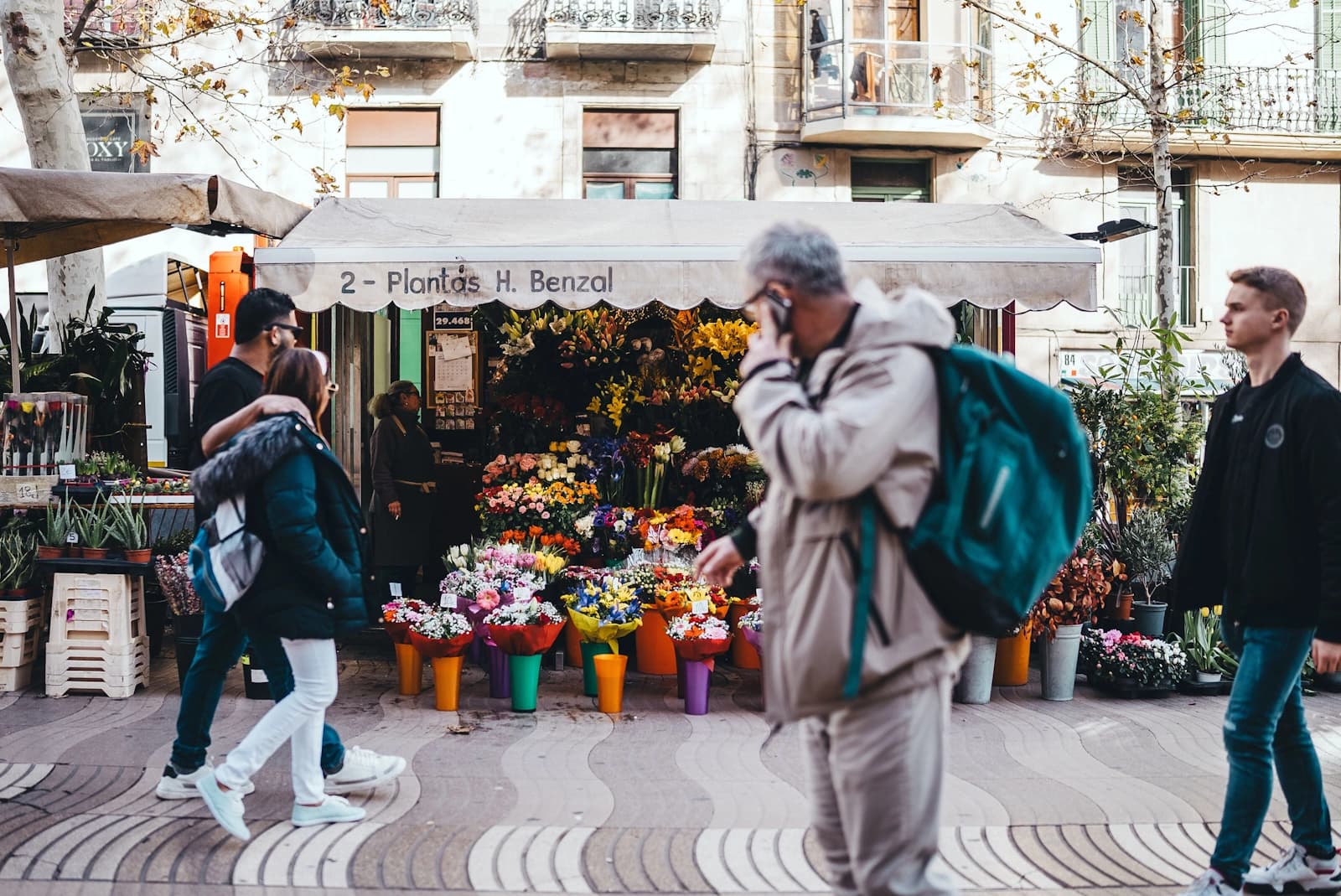
Importantly, La Rambla was not originally an exclusive boulevard for the wealthy. Its central position made it a meeting place for different social classes. Over time, cafés, shops, theatres, flower stalls, bookstalls and markets appeared along the street, creating the lively atmosphere that remains one of its defining characteristics.
La Boqueria and the Life of the Street
One of the best examples of this connection between La Rambla and everyday Barcelona is Mercat de la Boqueria. Food sellers were already active in this area as early as the 13th century. The modern municipal market opened in 1840, on the former site of the convent of Sant Josep. Its famous metal roof was completed in 1914.
For generations, La Boqueria has brought the sounds, smells and colours of Barcelona's food culture directly onto La Rambla. Today, it remains one of the street's most popular landmarks.
Another major institution is the Gran Teatre del Liceu, Barcelona's famous opera house. Opened in 1847, it became an important cultural centre for the city and one of Europe's best-known opera venues. The theatre suffered a devastating fire in 1994 but reopened after reconstruction in 1999.
A Place of Politics, Celebration and Conflict
Because La Rambla has always been a central public space, it has also witnessed some of Barcelona's most important moments. Political demonstrations, public celebrations, festivals and periods of social unrest have all taken place here.
The street became particularly important during the turbulent decades surrounding the Spanish Civil War. Its cafés, newspapers and public spaces made it a natural meeting point for political discussion and mobilisation. The history of La Rambla therefore reflects not only Barcelona's cultural life but also its political and social conflicts.
At the northern end, Font de Canaletes became another important gathering point. From the first half of the 20th century, Barcelona football supporters gathered there to discover match results, and it eventually became famous as a place where Barça supporters celebrate victories. Local tradition even says that anyone who drinks from the fountain will fall in love with Barcelona and return one day.
Art in the Middle of La Rambla
La Rambla is also an unusual open-air art space. In 1976, Catalan artist Joan Miró created the colourful circular mosaic known as Pla de l'Os, embedded directly into the pavement. Thousands of people walk across it every day, sometimes without noticing that they are standing on an important work by one of Catalonia's greatest artists.
Further towards the sea stands the Columbus Monument, completed in 1888 as part of the transformation of Barcelona's waterfront around the time of the Universal Exhibition. It marks the point where La Rambla reaches the port.
La Rambla Today
Modern La Rambla is undoubtedly one of Barcelona's busiest and most photographed places. Street performers, flower sellers, cafés, shops and millions of visitors create a constantly changing scene.
It can also feel crowded and highly tourist-oriented, but that is only one part of its character. Beneath the modern tourist activity is a street with centuries of history. Its markets, theatres, fountains, public celebrations and political gatherings have made La Rambla a kind of living record of Barcelona itself.
Walking from Plaça de Catalunya towards the sea means passing through several layers of the city's history in just over a kilometre. That is why La Rambla remains important: it is not simply a street to visit, but one of the places where Barcelona has continuously lived, changed and expressed itself.
Ready to explore Barcelona?
Build your personalised itinerary in 30 seconds — starting from your hotel.
Build my Barcelona route →
Comments
Comments
Loading comments...
Sign in to leave a comment