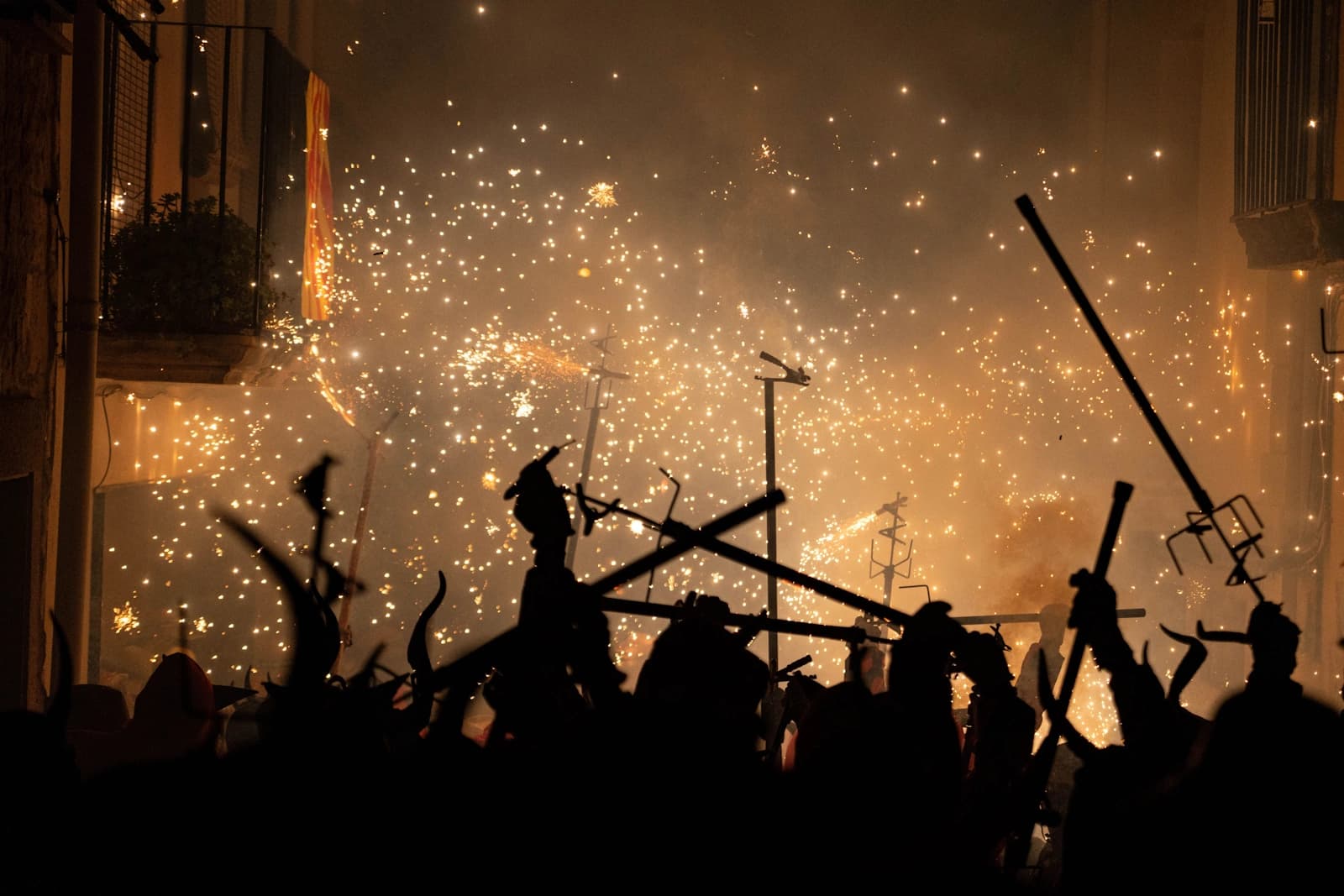
Festa Major: Catalonia’s Great Local Festival Tradition
Discover what Festa Major means in Catalonia, its centuries-old history, why it is so important to local communities, how towns and neighbourhoods choose their dates, and how it compares with traditional festivals elsewhere in Spain.
What Is a Festa Major?
If you spend any time in Catalonia, you will quickly come across the words Festa Major. Literally meaning “major festival” or “main festival”, it is the principal annual celebration of a town, village, neighbourhood or district.
Traditionally, a Festa Major was connected to the patron saint of the local community. However, the patron is not always the saint after whom the local parish is named. In some places, the celebration commemorates an important historical event or a local tradition instead.
Today, religion is only one part of the celebration. A modern Festa Major can include concerts, street parties, fireworks, markets, sports, children's activities, traditional dances, food, parades, castells (human towers), correfocs and competitions.
Most importantly, it is a celebration organised around the local community.
How Old Is the Tradition?
There is no single date when the Festa Major began because the tradition developed differently from one place to another. Some celebrations have documented histories going back several centuries.
For example, the Festa Major de Solsona began with a town vow in 1653, while its structure is documented from 1675. The Festa Major of Sant Pau in Sant Pere de Ribes has written evidence dating to 1740. The Festa Major of Vilafranca del Penedès has its origins in the 18th century, while Tarragona's Santa Tecla celebrations can be traced to a major procession held in 1321.
This means that some Catalan local festivals have been celebrated, in one form or another, for hundreds of years.
The traditions have also changed. Religious processions that once dominated the programme may now share the calendar with concerts, street food, children's events and contemporary cultural activities.
How Does Each Town Choose Its Date?
There is no single Festa Major date for all of Catalonia.
This is one of the interesting things about the tradition. Each town, village or neighbourhood has its own calendar, normally connected to its history, patron saint, religious feast day or another local tradition.
Sometimes the date is fixed. Festa Major de Gràcia, for example, begins on 15 August and traditionally runs for about a week.
Other celebrations use a different system. Sant Feliu de Pallerols holds its Festa Major around Second Easter (Pentecost), meaning the dates change each year. In Ametlla de Merola, the celebration was originally held on 15 August, but after the local church was dedicated to Saint Matthew, it moved to 21 September and was later adapted to the Sunday closest to the saint's feast day to fit modern working life.
So when someone asks, “When is the Festa Major in Catalonia?”, there is no single answer. Every community has its own.
Why Is Festa Major So Important?
A Festa Major is much more than a few days of entertainment. Historically, it was one of the moments when the whole community came together.
Neighbours, local associations, musicians, restaurants, shops, sports clubs and cultural groups all have a role. Many traditions are maintained by voluntary organisations and families who pass knowledge from one generation to the next.
This is particularly important in smaller towns and villages, where the Festa Major can become a kind of annual meeting point for the entire community. People who have moved away may return to their hometown, while younger generations take part in traditions that their grandparents also knew.
The festival therefore helps maintain a sense of local identity.
It can also be highly specific to the place. One town might be famous for its giants and capgrossos, another for traditional dances, another for castells, and another for a spectacular correfoc. The Catalan government’s cultural heritage catalogue lists many such local variations.
Is Festa Major Unique to Catalonia?
The concept is not unique to Catalonia.
Across Spain, towns and cities have their own major annual celebrations, often called fiestas patronales. These can also combine religious ceremonies, processions, concerts, fireworks, food, dancing and community events.
For example, towns in Valencia, Andalusia, Navarra and many other regions celebrate festivals dedicated to their patron saints. Spain's official tourism organisation describes the country's towns as having their own principal local festivals, many of which take place during the summer.
What makes the Catalan Festa Major distinctive is the particular collection of traditions that has developed around it. Castells, gegants, capgrossos, correfocs, sardanes and traditional seguicis can give Catalan festivals a very recognisable character.
The difference is therefore not that Catalonia invented the idea of a local annual festival. Rather, Catalonia developed its own version of this wider Iberian and European tradition.
Festa Major in Modern Catalonia
Today, Festa Major continues to evolve. Some celebrations are increasingly secular, while others retain strong religious elements. New concerts, cultural events and community activities are added alongside centuries-old traditions.
For visitors, a Festa Major can be one of the best ways to experience Catalonia beyond its museums and famous landmarks. Instead of watching local culture from the outside, you see streets, squares and public spaces being transformed into places where residents themselves celebrate.
That is perhaps the most important thing to understand about Festa Major: it belongs to the community.
Every town has its own version, its own date and its own traditions. And that is precisely why there is no single “Catalan Festa Major”—there are hundreds of them, each telling a small part of Catalonia's history and identity.
Ready to explore Barcelona?
Build your personalised itinerary in 30 seconds — starting from your hotel.
Build my Barcelona route →Related articles
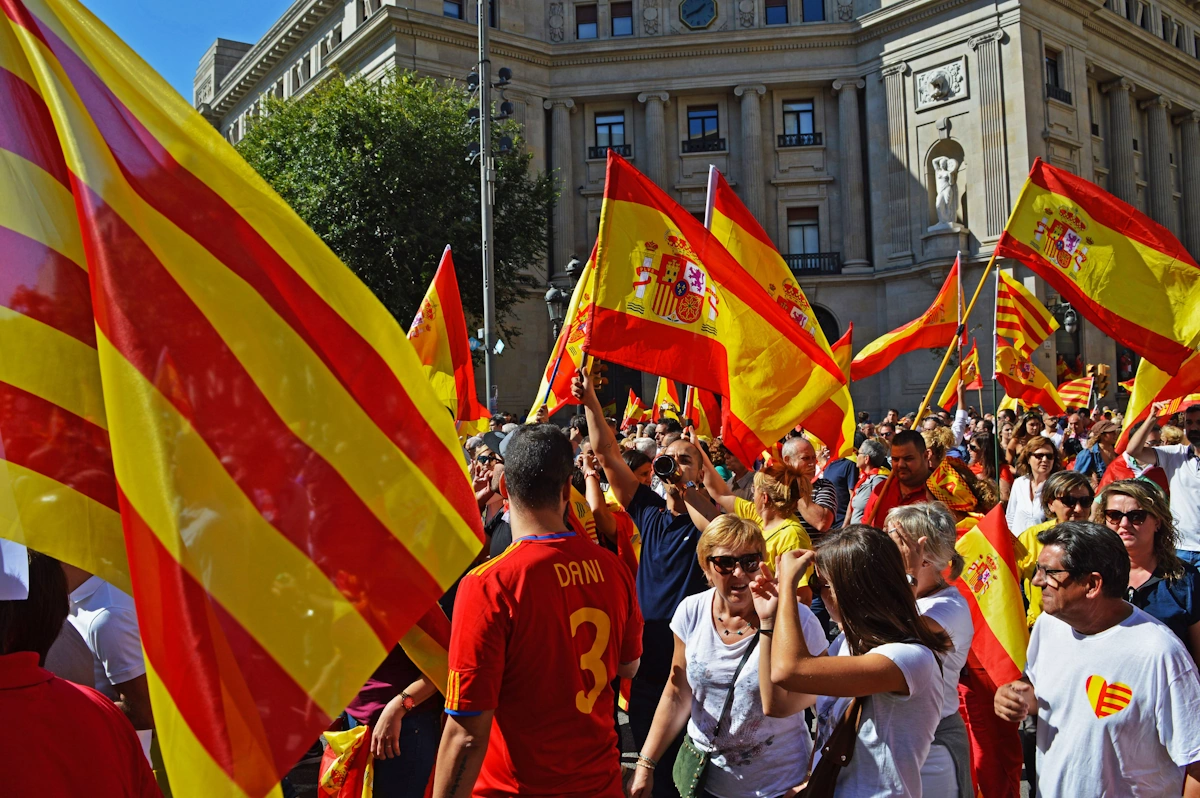
12 October: Spain’s National Day and Día de la Hispanidad
Discover why Spain celebrates 12 October as its National Day, its history, the Día de la Hispanidad and what the holiday means in Catalonia.
8 Oct 2026
Why Do Catalans Love Poop? The Curious World of Caganers, Tió and Scatological Humour
Why do Catalans put poop in Christmas traditions? Discover the caganer, Tió de Nadal and the history of Catalan scatological humour.
7 Oct 2026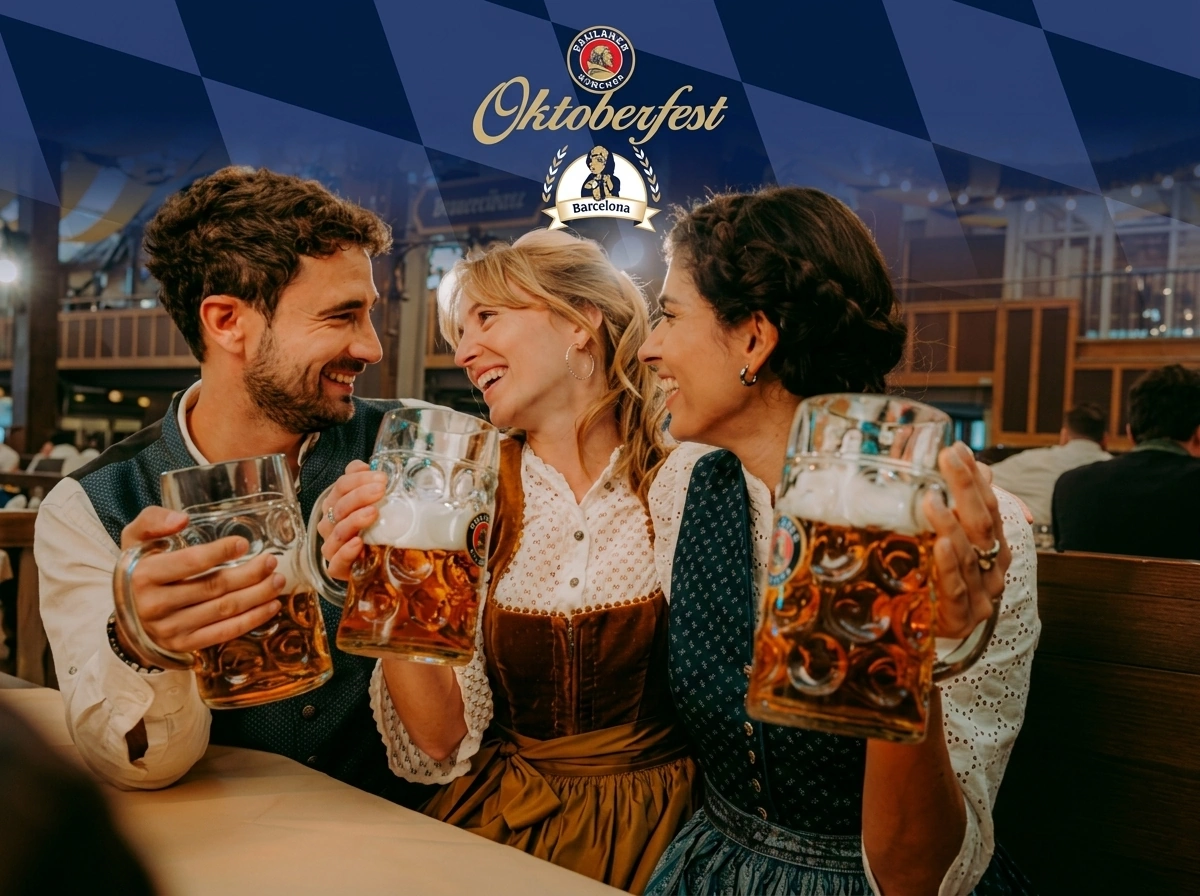
Oktoberfest Barcelona: Bavaria Meets Barcelona at La Wiesn
Oktoberfest Barcelona brings Bavarian beer, food, music and traditions to La Wiesn, with a distinctly Mediterranean atmosphere.
4 Oct 2026
Comments
Comments
Loading comments...
Sign in to leave a comment