Antoni Gaudí: Life, Inspiration, Famous Works and Legacy
Discover Antoni Gaudí’s life, inspirations, famous Barcelona buildings, tragic death and lasting legacy in Catalan architecture.
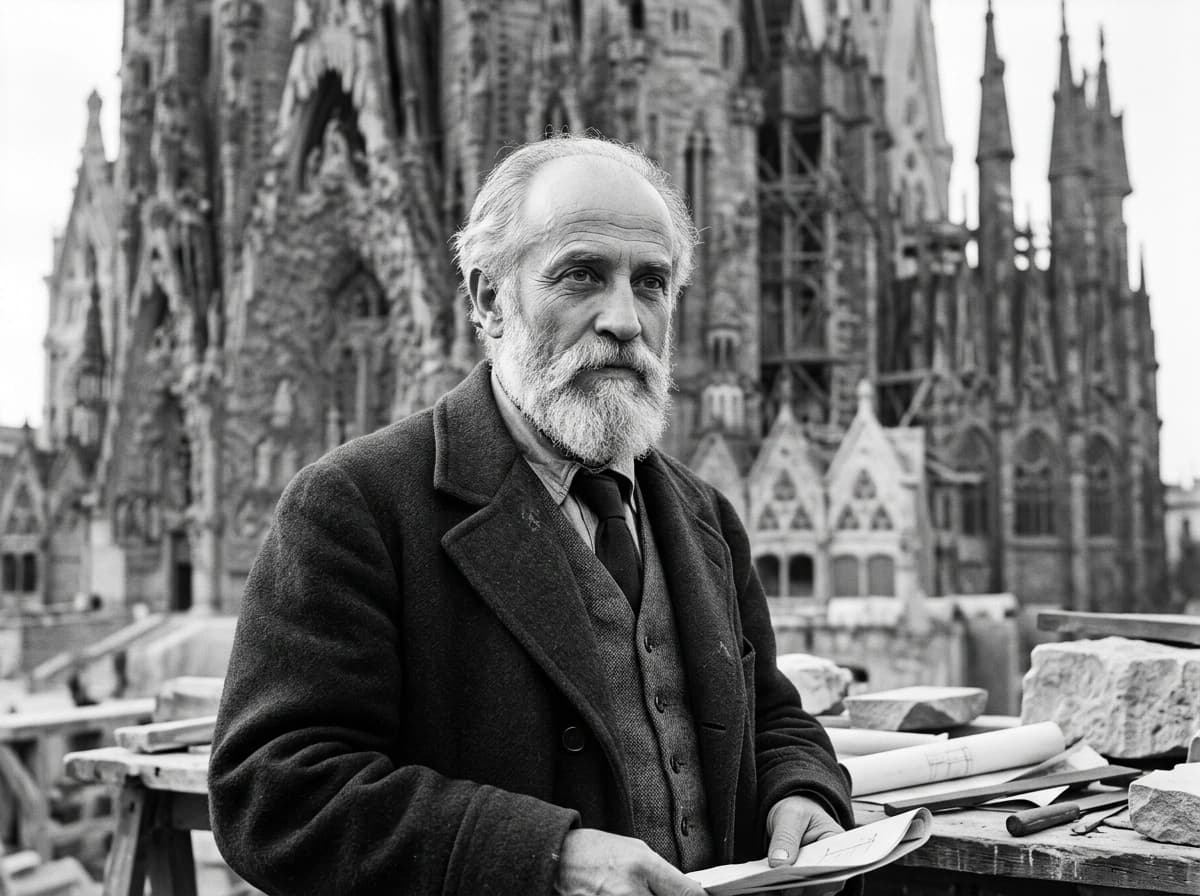
Antoni Gaudí is one of the most recognisable architects in the world and one of the defining figures of Catalan Modernisme. His buildings transformed Barcelona, combining architecture, sculpture, engineering, religion and decoration in ways that were unlike anything seen before. Although his work is now famous worldwide, Gaudí developed his extraordinary style gradually, influenced by nature, Catalan history, religion, traditional crafts and the architecture he studied as a young man.
Gaudí’s Young Years
Antoni Gaudí i Cornet was born on 25 June 1852 in Reus, in the province of Tarragona. He grew up in a family of coppersmiths, and working with metal helped him develop an early understanding of three-dimensional forms and craftsmanship. As a child, he was particularly interested in drawing and observing nature. Health problems, including rheumatism, meant that he often spent time outdoors, where he developed a lifelong fascination with plants, animals, trees and natural structures.
Gaudí moved to Barcelona to study architecture. He entered the newly established Barcelona School of Architecture and completed his studies in 1878. During his training, he also worked as a draughtsman and gained practical experience in workshops and architectural studios.
One important influence during these years was Elies Rogent, director of the Barcelona School of Architecture. Rogent had a strong interest in medieval Catalan architecture and encouraged students to study historic buildings. Gaudí was also strongly influenced by the architect Joan Martorell, with whom he worked after completing his studies. Martorell became an important mentor and professional influence during Gaudí's early career.
What Inspired Gaudí?
Nature was probably Gaudí's most important source of inspiration. Instead of copying natural forms simply as decoration, he studied how nature solved structural problems. Trees, bones, shells, flowers and the shapes of mountains influenced his columns, vaults, façades and interior spaces. He increasingly designed buildings around curved and organic forms rather than the straight lines common in much traditional architecture.
Religion was another major influence. Gaudí was deeply Catholic, and religious symbolism became increasingly important in his later work, especially at the Sagrada Família. He also drew inspiration from medieval architecture, Catalan traditions, Gothic buildings, traditional craftsmanship and new construction technologies. His work combined these influences with modern materials and engineering techniques.
A particularly important relationship was with the industrialist Eusebi Güell. Güell became Gaudí's patron and commissioned several major projects, giving the architect considerable creative freedom. Their collaboration produced some of Gaudí's most famous buildings.
Gaudí’s Most Famous Works
Some of his best-known works include:
- · Sagrada Família – Gaudí's great lifelong project and the building most closely associated with his name.
- · Park Güell – A colourful combination of architecture, gardens, mosaics and sculptural forms.
- · Casa Batlló – Famous for its flowing façade, colourful ceramics and unusual interior spaces.
- · Casa Milà (La Pedrera) – Known for its undulating stone façade, sculptural roof and innovative structure.
- · Casa Vicens – One of Gaudí's earliest important buildings and an early example of his developing personal style. Palau Güell – A sophisticated urban mansion designed for Eusebi Güell.
- · Crypt of Colònia Güell – An experimental work where Gaudí developed structural ideas that later influenced the Sagrada Família.
UNESCO recognises seven Gaudí properties as World Heritage: Park Güell, Palau Güell, Casa Milà, Casa Vicens, the Nativity façade and crypt of the Sagrada Família, Casa Batlló and the crypt of Colònia Güell.
His Final Years and Death
In the final stage of his career, Gaudí devoted himself almost completely to the Sagrada Família. From 1914 onwards, he stopped accepting new major commissions so that he could concentrate on the basilica. He lived a relatively simple life and spent much of his time working at the construction site.
On 7 June 1926, Gaudí was struck by a tram in Barcelona while walking to the Sant Felip Neri area. Because of his simple appearance, he was initially not recognised. He was taken to the Hospital de la Santa Creu, where he died three days later, on 10 June 1926. He was 73 years old. His funeral procession attracted a large crowd and ended at the Sagrada Família, where he was buried in the crypt.
Gaudí’s Heritage
Gaudí's influence extends far beyond Barcelona. His architecture demonstrated that buildings could combine structural innovation with sculpture, decoration, symbolism and craftsmanship. His highly personal interpretation of Modernisme also anticipated aspects of later modern architecture.
His reputation grew significantly after his death. Three of his buildings were included in the UNESCO World Heritage List in 1984, while four more were added in 2005. Today, his architecture is one of the defining features of Barcelona and an important part of Catalonia's cultural heritage.
In 2026, Catalonia is marking 100 years since Gaudí's death with a dedicated Gaudí Year, reflecting the continuing importance of his work.
For visitors to Barcelona, Gaudí's legacy is impossible to miss. His buildings are not simply monuments from the past: they remain living parts of the city and continue to shape the way Barcelona is understood around the world.
Ready to explore Barcelona?
Build your personalised itinerary in 30 seconds — starting from your hotel.
Build my Barcelona route →Related articles
Catedral de Barcelona: History, Construction and Interesting Facts
Discover Barcelona Cathedral’s history, from its ancient foundations and Gothic construction to its Neo-Gothic façade, famous figures and fascinating facts.
2 Oct 2026
Hospital de Sant Pau Barcelona: History, Architecture and Legacy
Discover Hospital Sant Pau Barcelona, from its medieval origins and Modernista architecture to its medical history, UNESCO status and present-day role.
1 Oct 2026
Joan Miró: Life, Work, Recognition and Legacy
Discover Joan Miró’s life, artistic journey, international recognition and lasting legacy in Barcelona, Catalonia and the world.
29 Sept 2026
Comments
Comments
Loading comments...
Sign in to leave a comment