Arc de Triomf Barcelona: History, Architecture and Modern Life
Discover Barcelona’s Arc de Triomf, built for the 1888 Universal Exposition and known for its brickwork, sculptures and unique architecture.
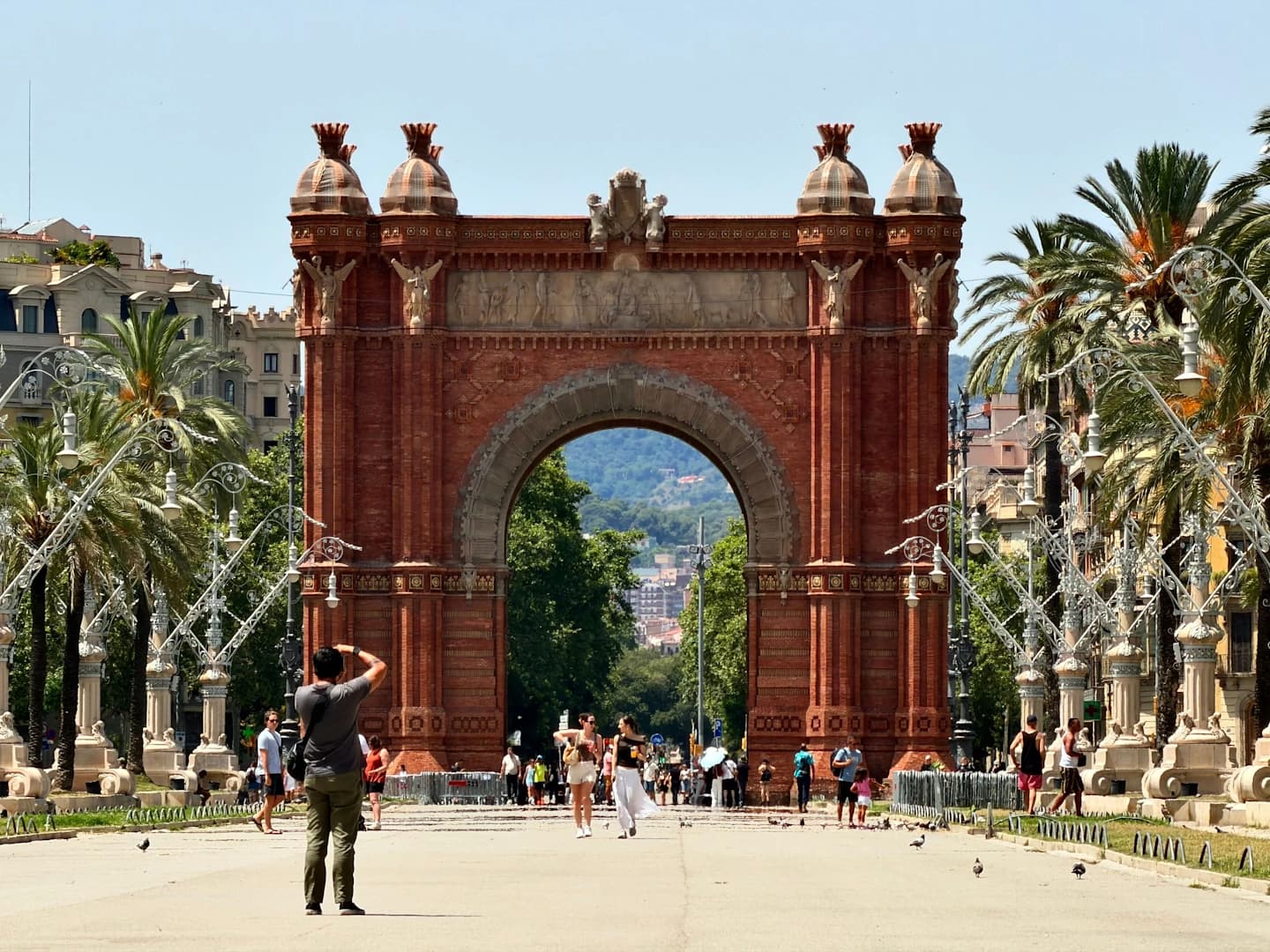
The Arc de Triomf is one of Barcelona’s most recognisable monuments, standing at the northern end of the Passeig de Lluís Companys. Unlike many famous triumphal arches, it was not built to celebrate a military victory. Instead, it was created as the main entrance to the 1888 Barcelona Universal Exposition, welcoming visitors to an international event designed to present Barcelona as a modern and industrial European city.
Built for the 1888 Universal Exposition
Barcelona's Universal Exposition opened in 1888, with much of the event taking place in and around the Parc de la Ciutadella. The organisers wanted visitors to experience an impressive entrance before reaching the exhibition grounds. The Arc de Triomf was therefore positioned at the beginning of the Saló de Sant Joan, today's Passeig de Lluís Companys, creating a monumental gateway towards the park.
The architect chosen for the project was Josep Vilaseca i Casanovas, one of the important architects of Barcelona's generation that preceded the full development of Catalan Modernisme.
The arch was conceived as a permanent structure rather than a temporary exhibition decoration. That decision was significant: after the exhibition closed, Barcelona kept one of its most visible architectural reminders of the city's transformation in the late 19th century.
A different kind of triumphal arch
At first glance, the building resembles the monumental triumphal arches of ancient Rome. But Vilaseca deliberately gave the traditional form a distinctly Barcelona character.
One of its most striking features is the extensive use of exposed red brick. Instead of covering the structure with expensive stone, Vilaseca made the brick itself part of the architectural design. The material was associated with industrial construction but was increasingly being appreciated by architects for its decorative possibilities. The arch combines the brick with stone, sculptural decoration and glazed ceramic.
The design also incorporates decorative patterns influenced by Mudéjar architecture, particularly in the brickwork. This mixture of historical references and modern construction techniques was characteristic of the architectural experimentation taking place in Barcelona at the time.
The monument is approximately 24 metres high to the main structure and about 28 metres wide, with additional height provided by the small domed towers. Its proportions were carefully designed for its location and relationship with the surrounding boulevard.
What do the sculptures mean?
The Arc de Triomf is covered with symbolic sculpture. The principal decoration includes references to the Spanish state, agriculture, commerce, industry and the city of Barcelona.
One of the most notable works is Josep Reynés' sculpture Barcelona rep les nacions — “Barcelona receiving the nations”. It represents Barcelona welcoming the international visitors arriving for the exhibition.
Other sculptural groups were created by artists including Josep Llimona and Antoni Vilanova, adding historical and allegorical figures to the monument.
The combination of sculpture, brickwork and ceramics makes the Arc de Triomf different from the monumental stone arches found in many European capitals.
From exhibition gateway to city landmark
After the 1888 exhibition, the arch remained in place and the surrounding area developed into an important urban promenade. The former exhibition grounds became today's Parc de la Ciutadella, while the long boulevard connecting the arch with the park became a popular public space.
The monument therefore changed its function. It was no longer an entrance to an international exhibition but became a permanent part of Barcelona's urban landscape.
Its location also makes it an important link between the Eixample and Ciutat Vella. Walking south from the arch leads towards the park and the old city, while the broad Passeig de Lluís Companys provides an open pedestrian approach.
The Arc de Triomf today
Today, the Arc de Triomf is one of Barcelona's favourite meeting points. The wide promenade around it is used for walking, cycling, outdoor activities, public events and celebrations.
It is also frequently used as a starting or finishing point for cultural events, races, demonstrations and large gatherings. The open space allows the monument to function not just as a historical object but as part of everyday city life.
For visitors, the Arc de Triomf is also an excellent example of Barcelona's architectural transition in the late 19th century. It combines the monumental language of the past with the materials and artistic experimentation of a rapidly modernising city.
Its greatest historical significance may therefore be that it was built to announce Barcelona's arrival on an international stage. More than 130 years later, the arch still stands in the same city landscape, no longer welcoming visitors to the 1888 exhibition, but welcoming people into one of Barcelona's most characteristic public spaces.
Ready to explore Barcelona?
Build your personalised itinerary in 30 seconds — starting from your hotel.
Build my Barcelona route →Related articles
12 October: Spain’s National Day and Día de la Hispanidad
Discover why Spain celebrates 12 October as its National Day, its history, the Día de la Hispanidad and what the holiday means in Catalonia.
8 Oct 2026
Catedral de Barcelona: History, Construction and Interesting Facts
Discover Barcelona Cathedral’s history, from its ancient foundations and Gothic construction to its Neo-Gothic façade, famous figures and fascinating facts.
2 Oct 2026
Hospital de Sant Pau Barcelona: History, Architecture and Legacy
Discover Hospital Sant Pau Barcelona, from its medieval origins and Modernista architecture to its medical history, UNESCO status and present-day role.
1 Oct 2026
Comments
Comments
Loading comments...
Sign in to leave a comment