La Diada Nacional de Catalunya: History and Meaning
Discover the history of La Diada Nacional de Catalunya, celebrated every 11 September. Learn what happened in 1714, how the tradition began, why it was banned under Franco and what the Catalan National Day means today.
What Is La Diada Nacional de Catalunya?
Every year on 11 September, Catalonia celebrates its National Day, known in Catalan as La Diada Nacional de Catalunya or simply La Diada. In Spanish, it is often called Día de Cataluña.
It is one of the most important dates in the Catalan calendar. The day commemorates the events of 11 September 1714, when Barcelona fell to the Bourbon forces during the War of the Spanish Succession. The defeat marked the end of the siege of Barcelona and was followed by the abolition of Catalan institutions and traditional liberties under the new Bourbon monarchy.
Unlike many national holidays, La Diada does not celebrate a military victory or independence. Instead, its meaning is connected to historical memory, Catalan identity, language, institutions and the defence of political and cultural rights.
What Happened in 1714?
The story goes back to the War of the Spanish Succession, which began after the death of the childless Spanish king Charles II in 1700.
Catalonia initially supported the Habsburg candidate, Archduke Charles, against the Bourbon Philip of Anjou, who eventually became Philip V of Spain. After the international situation changed, Barcelona was left increasingly isolated.
The city endured a long siege. On 11 September 1714, Bourbon troops finally broke through Barcelona's defences and the city capitulated.
The defeat had major consequences. The Bourbon government introduced the Nueva Planta system, which abolished the institutions of the former Crown of Aragon and reduced Catalonia's political autonomy. The events of 1714 therefore became an important reference point in later Catalan historical memory.
How Did La Diada Begin?
The modern Diada did not begin in 1714. The first known commemoration took place much later, in 1886, when a memorial Mass was held at Santa Maria del Mar in Barcelona for those who had died defending the city in 1714.
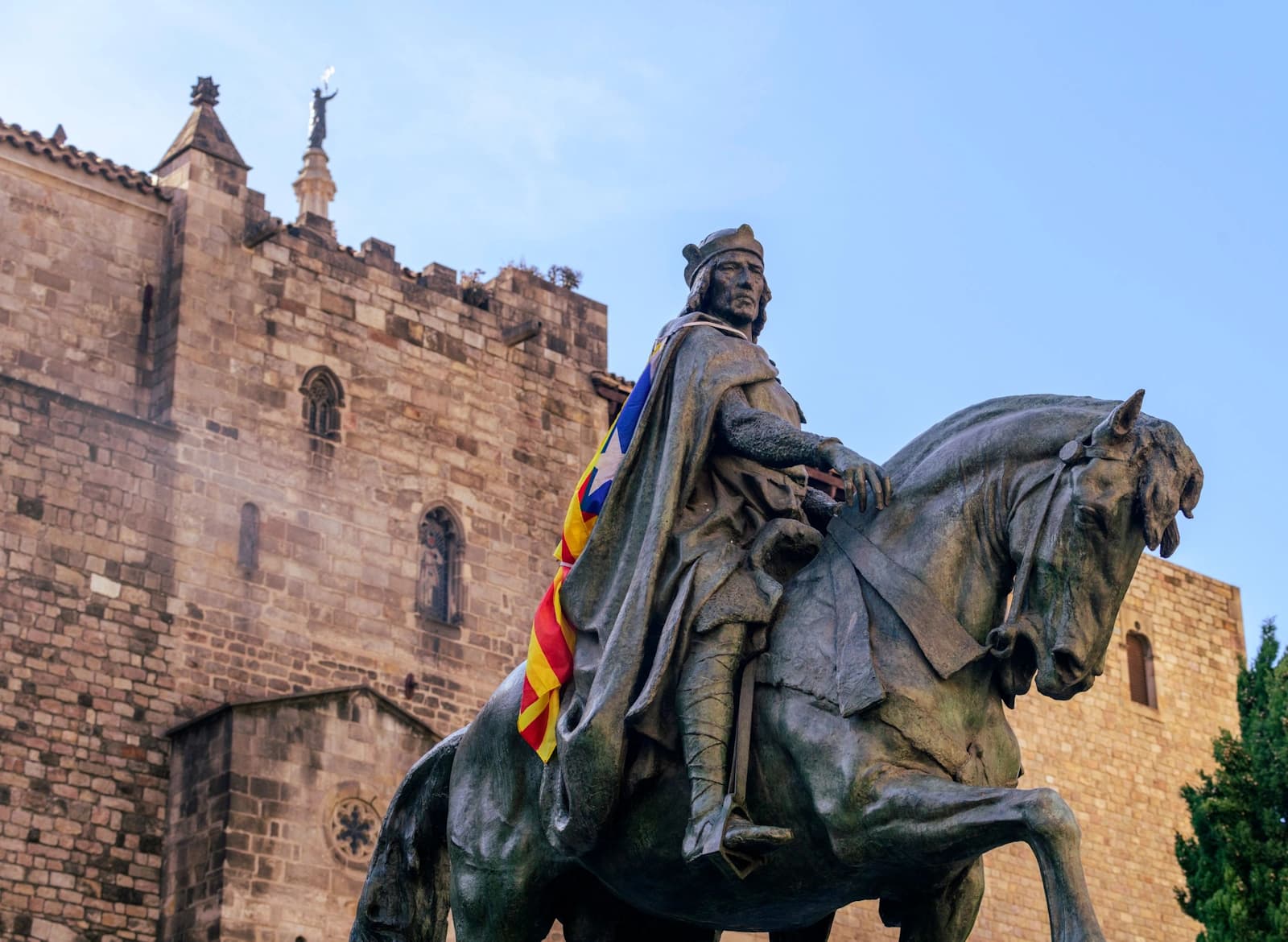
Two years later, a statue dedicated to Rafael Casanova, one of the leaders of Barcelona's defence in 1714, was installed near the Arc de Triomf during the Universal Exposition of 1888.
During the early 20th century, the commemoration increasingly became connected with Catalan cultural and political movements. It was celebrated during the Second Spanish Republic, but its meaning and form changed according to the political situation.
The Diada Under Franco
After the Spanish Civil War, the Franco dictatorship banned public celebrations of the Diada. Catalan political and cultural expressions were heavily restricted, and the commemoration largely moved underground.
Despite the prohibition, people continued to remember 11 September through private events and acts of political opposition. In 1971, for example, Catalan activists secretly broadcast a message accompanied by Els Segadors, the song that would later become Catalonia's national anthem.
The end of Franco's dictatorship changed everything.
In 1976, the first legal post-Franco Diada was held in Sant Boi de Llobregat. The following year, on 11 September 1977, around one million people demonstrated in Barcelona under the slogan “Freedom, Amnesty and Statute of Autonomy”. The mobilisation became an important moment in the restoration of Catalan self-government.
When Did It Become an Official National Holiday?
The Diada was officially declared the National Holiday of Catalonia in 1980, through Law 1/1980 of 12 June. It was one of the first laws passed by the restored Parliament of Catalonia.
The law describes 11 September as a day that remembers the loss of freedoms in 1714 while also expressing the hope of recovering national institutions and liberties.
That combination remains important today: the Diada looks backwards at history but is also used to discuss Catalonia's present and future.
What Happens During La Diada?
The day begins with institutional ceremonies and floral offerings, particularly at monuments connected with the events of 1714. Cultural performances, concerts and public events are also held throughout Catalonia.
The Catalan flag, the senyera, is highly visible, while many people display flags from balconies and public buildings.
Another important symbol is Els Segadors, Catalonia's national anthem. Its origins go back to a popular song associated with the Reapers' War of 1640, although the modern version of the anthem was created centuries later.
La Diada can also include large political demonstrations. For decades, different political movements have used 11 September to express their positions on Catalan autonomy, independence, language and relations with Spain.
La Diada Today
The meaning of La Diada is not identical for everyone in Catalonia. For some people, it is primarily a celebration of Catalan culture, language and identity. For others, it is strongly associated with the independence movement. Others regard it simply as a public holiday and an opportunity to participate in cultural and community events.
In 2026, the Diada has an additional historical significance: it marks 50 years since the first legal post-Franco celebration in 1976, when the return of the festival to public life became a symbol of the restoration of democratic freedoms.
After more than three centuries, La Diada remains one of Catalonia's strongest symbols of collective memory. What began as a commemoration of the defeat of 1714 has evolved into a day dedicated to Catalan identity, remembrance, culture, political expression and the idea of self-government.
Ready to explore Barcelona?
Build your personalised itinerary in 30 seconds — starting from your hotel.
Build my Barcelona route →Related articles

Why Do Catalans Love Poop? The Curious World of Caganers, Tió and Scatological Humour
Why do Catalans put poop in Christmas traditions? Discover the caganer, Tió de Nadal and the history of Catalan scatological humour.
7 Oct 2026
Catedral de Barcelona: History, Construction and Interesting Facts
Discover Barcelona Cathedral’s history, from its ancient foundations and Gothic construction to its Neo-Gothic façade, famous figures and fascinating facts.
2 Oct 2026
Ratafia: The Traditional Catalan Herbal Liqueur
Discover ratafia, Catalonia’s traditional herbal liqueur made with green walnuts, herbs and spices, including its history and recipe.
30 Sept 2026
Comments
Comments
Loading comments...
Sign in to leave a comment