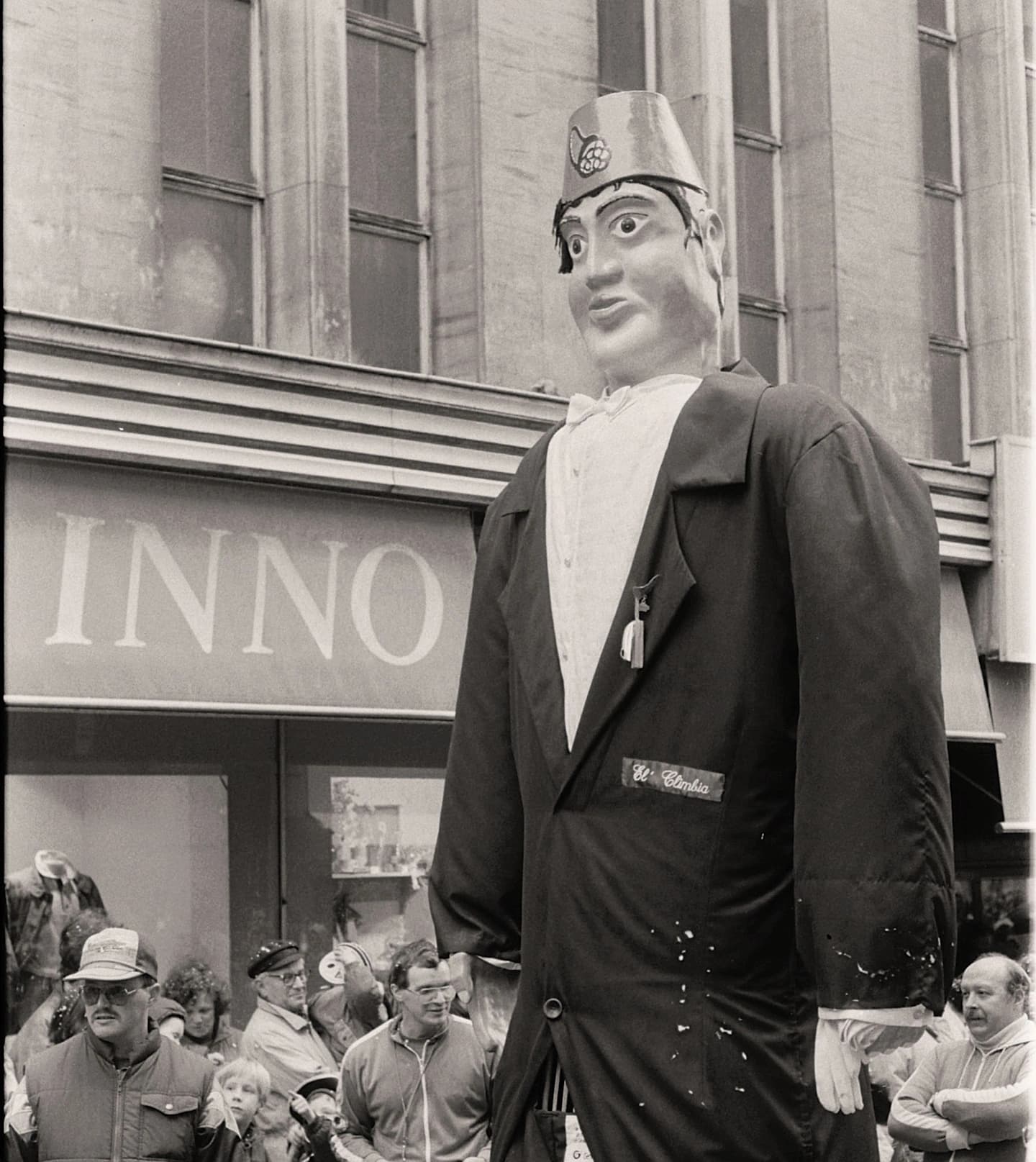
Gegants: The Giant Figures of Catalan Festivals
Discover Catalonia’s gegants: giant figures with medieval origins that remain a central part of festas majors, processions and local celebrations.
If you visit Catalonia during a festa major, a local procession or another traditional celebration, you may suddenly see enormous human figures moving through the streets. These are the gegants — giant figures that have become one of the most recognisable elements of Catalan popular culture.
They represent kings, queens, nobles, historical characters, local residents and sometimes completely fictional personalities. Carried by people inside them, they dance, turn and move through the streets accompanied by traditional music. For visitors, they can look like a colourful attraction. For local communities, however, gegants are much more than decoration: they are part of the history and identity of the town or neighbourhood.
When did the gegants appear?
The tradition is centuries old. The earliest documented reference to a giant in Catalonia dates from 1424, in Barcelona. The city's Llibre de les Solemnitats records a figure described as “Lo Rey David ab lo Giguant” taking part in the Corpus Christi procession. The giant is understood to have represented Goliath. This is currently also the earliest documented reference to a processional giant in Europe.
These early figures were connected with medieval religious processions, particularly Corpus Christi. Processions included theatrical or symbolic characters designed to communicate religious stories to a largely non-literate population. Giants and other large figures formed part of this wider tradition of entremesos, combining religion, theatre and public spectacle.
Over the centuries, the religious meaning became less dominant. Giants increasingly became characters belonging to the community itself, appearing at civic celebrations, fairs and local festivals.
Who are the gegants?
There is no single type of gegant. Each town, neighbourhood or association can have its own figures, often with their own names, costumes and stories.
Some represent historical rulers or legendary characters. Others represent traditional Catalan social figures, such as peasants, merchants or nobles. In Barcelona, for example, the city's current official giants represent King Jaume I and Queen Violant of Hungary, based on figures introduced in 1929.
Some gegants are surprisingly heavy, meaning that carrying one is a real physical task. The person inside normally supports the structure while walking and dancing, often following the rhythm of a gralla or other traditional instruments.
The giants are frequently accompanied by capgrossos, or “big heads”. These smaller figures have oversized heads and can represent comic, historical or imaginary characters.
What do they do at festivals?
Gegants usually appear as part of a cercavila, a procession through the streets. Rather than simply standing still, they dance and interact with the crowd.
Their appearance often marks an important moment in a local celebration. At a festa major, the arrival of the giants can signal that the traditional part of the festivities is beginning. They may visit squares, participate in dances and meet giants from neighbouring towns.
This creates a strong sense of community. Behind every pair of giants there is usually a colla gegantera, a group responsible for storing, maintaining and carrying the figures. These associations help pass the tradition from one generation to another.
Why are gegants found at so many Catalan festivals?
The answer lies in their flexibility. Gegants can be part of religious celebrations, civic festivals, neighbourhood fiestas and commemorative events. They provide a connection between the past and the present without requiring everyone to share the same beliefs.
The tradition has also proved capable of changing. Barcelona has created giants representing modern identities and organisations, showing that the figures can continue to evolve rather than simply reproduce medieval characters.
They are particularly important during festa majors, when a neighbourhood or town celebrates its own identity. The giants belong to that community, and their appearance turns history into something visible and participatory.
The tradition is also deeply embedded outside Barcelona. At La Patum in Berga, for example, giants are among the traditional characters taking part in the famous Corpus festival, a celebration whose roots go back to medieval Corpus processions.
A living Catalan tradition
Today, gegants are among the easiest Catalan traditions for visitors to encounter. During summer especially, they can appear alongside castellers, correfocs, sardanes and street musicians.
Their importance is not simply that they are old. They have survived because communities continue to care for them, carry them and create new stories around them.
For a visitor, seeing a pair of gegants dancing through a Catalan street is therefore more than a colourful photo opportunity. It is a glimpse of a tradition that connects medieval processions with the living festivals of modern Catalonia.
Ready to explore Barcelona?
Build your personalised itinerary in 30 seconds — starting from your hotel.
Build my Barcelona route →Related articles

Why Do Catalans Love Poop? The Curious World of Caganers, Tió and Scatological Humour
Why do Catalans put poop in Christmas traditions? Discover the caganer, Tió de Nadal and the history of Catalan scatological humour.
7 Oct 2026
Why Do Catalans Say “Merci”? The Story Behind Gràcies, Mercès and Merci
Why do some Catalans say “merci”? Discover the history of gràcies, mercès and the French influence behind this familiar expression.
6 Oct 2026
Ratafia: The Traditional Catalan Herbal Liqueur
Discover ratafia, Catalonia’s traditional herbal liqueur made with green walnuts, herbs and spices, including its history and recipe.
30 Sept 2026
Comments
Comments
Loading comments...
Sign in to leave a comment